
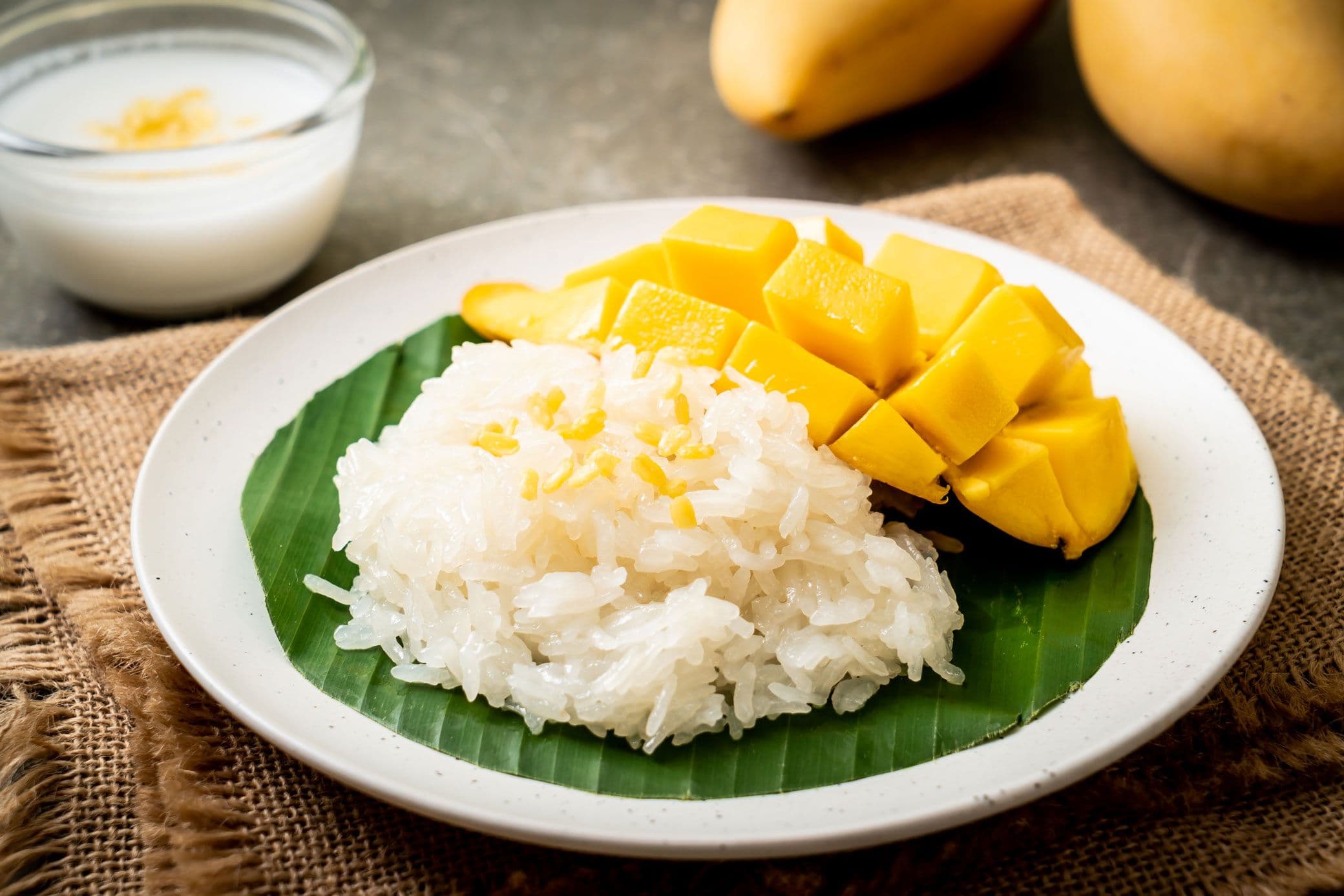

Mango sticky rice is one of the most recognizable Thai desserts in the world and may be one of the best examples of how simple Thai food can still feel memorable.
The dessert combines sticky rice, ripe mango, and coconut milk into a balance of sweetness, richness, freshness, and soft texture.
Why Mango Sticky Rice Is Famous
Mango sticky rice became internationally famous because it feels both tropical and uniquely Thai.
The ingredients reflect Southeast Asia clearly, especially the long connection between rice, coconut, and mango in regional food culture.
The Balance of Flavors
One reason mango sticky rice feels different from many Western desserts is the use of coconut milk and salt to create balance rather than pure sweetness.
Good mango sticky rice should taste creamy, fragrant, slightly salty, and fresh at the same time.
Thai sticky rice is steamed before being mixed with coconut milk, sugar, and a small amount of salt.
Popular mango varieties include nam dok mai and ok rong, both known for sweet flavor and smooth texture.
Fresh coconut milk gives the dessert its rich fragrance.
Thai mangoes are usually sweetest during the hot season.
The best versions balance sweetness with slight saltiness.
Best Season to Eat It
Traditionally, mango sticky rice was considered a seasonal dessert because Thai mangoes taste best during the hot season from around March to May.
Although the dessert is now available almost year-round, many Thai people still believe the best versions appear during mango season.
For many Thai people, mango sticky rice is closely connected to the feeling of summer.
How to Recognize Good Mango Sticky Rice
Good mango sticky rice should have soft but not mushy sticky rice, fragrant coconut milk, and ripe mango that tastes sweet without excessive sourness.
Some restaurants also add crispy mung beans or crunchy toppings for extra texture.
Popular mango sticky rice shops in Bangkok often sell out quickly during peak travel season, especially well-known places like Mae Varee and Kor Panich.