
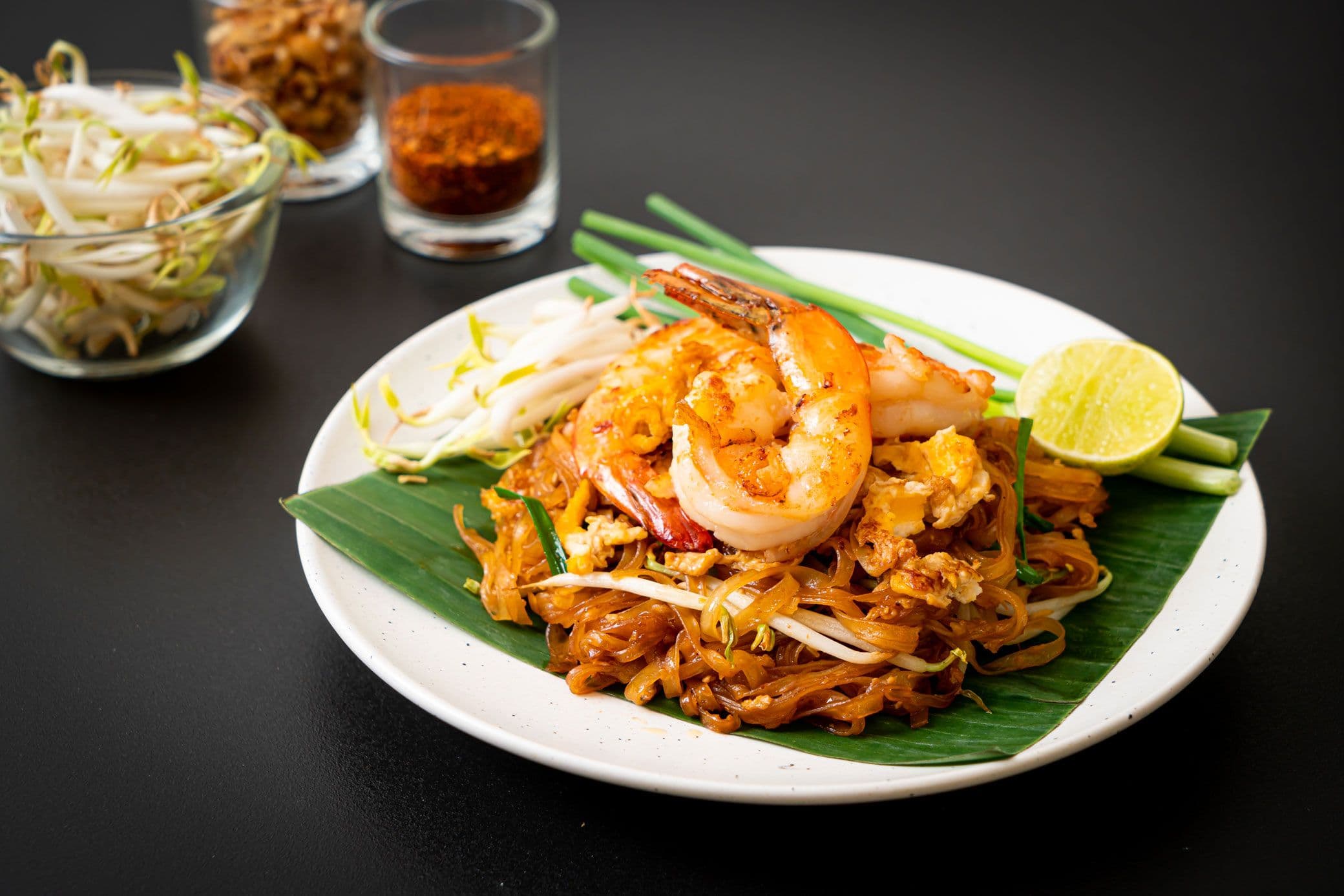

Pad Thai is one of the most recognizable Thai dishes in the world and often becomes the first Thai meal many travelers try.
Although it may look like a simple stir-fried noodle dish, Pad Thai reflects a mix of Thai flavors, Chinese culinary influence, and Thailand’s modern food culture.
Why Pad Thai Is Famous
Pad Thai became internationally famous because it combines flavors that many visitors find approachable while still feeling distinctly Thai.
The dish balances sweet, sour, salty, nutty, and smoky flavors in a way that feels both comforting and complex.
What Makes Good Pad Thai
One of the easiest ways to recognize good Pad Thai is balance.
The sauce should not be overwhelmingly sweet, the noodles should stay slightly chewy rather than soggy, and the tamarind flavor should still be noticeable.
Fresh bean sprouts, chives, peanuts, lime, and the aroma from a hot wok are also important parts of the experience.
Good Pad Thai balances sweet, sour, salty, and smoky flavors.
Street food stalls often create a stronger smoky wok flavor.
Bean sprouts, peanuts, lime, and chives should taste fresh and crisp.
Different Types of Pad Thai
Today, Pad Thai exists in many forms across Thailand.
Some versions use fresh shrimp while others use dried shrimp, pork, crab, seafood, or vegetarian ingredients.
Travelers will also find everything from cheap street food stalls to modern restaurants serving fine dining interpretations of Pad Thai.
Even though recipes vary widely, the best Pad Thai still feels balanced rather than overly sweet or heavy.
Tips Before Ordering
Many Pad Thai restaurants serve lime, chili flakes, sugar, and peanuts separately so customers can adjust flavors themselves.
Some local versions may taste less sweet than tourist-oriented versions.
Street food vendors often cook Pad Thai over extremely high heat, which creates stronger wok aroma and texture.
Popular areas for trying Pad Thai in Bangkok include Yaowarat, local night markets, and long-running street food restaurants.