
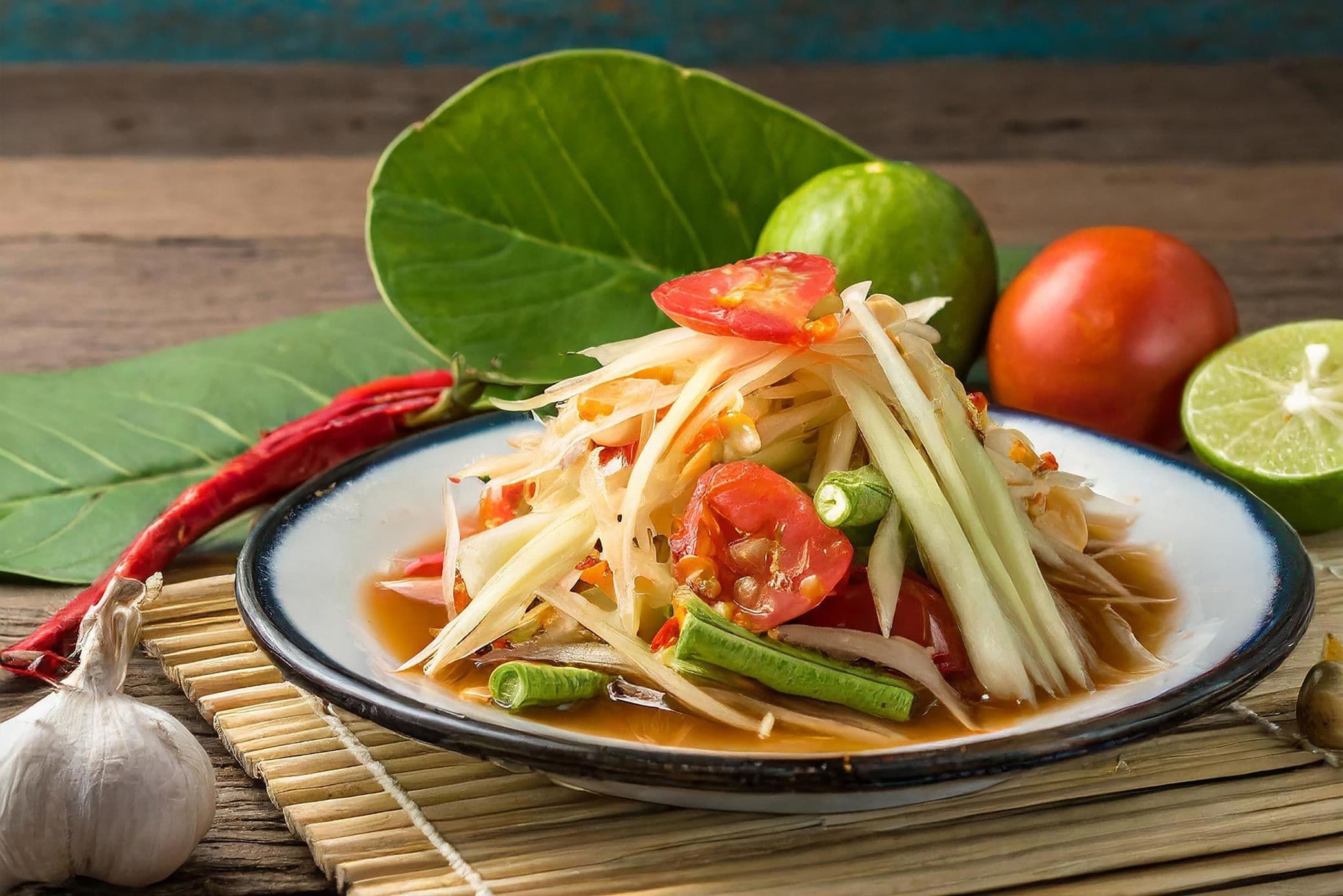

Som Tam is one of the dishes that most clearly reflects the food culture of northeastern Thailand and the Mekong region.
For many travelers, it may also be one of the boldest Thai dishes because of its strong mix of chili, lime, fish sauce, fermented flavors, and fresh crunchy texture.
Why Som Tam Is So Unique
Although many foreigners first see Som Tam as a type of salad, the flavor structure is very different from most Western salads.
Som Tam combines spicy, sour, salty, sweet, and umami flavors in a way that feels intense yet surprisingly balanced.
The Role of Pla Ra
While many international visitors know sweet-style Thai Som Tam with peanuts and dried shrimp, traditional versions from Isaan and Laos often rely heavily on pla ra.
Pla ra is fermented fish sauce with strong aroma and deep umami flavor that plays an important role in northeastern Thai cuisine.
For many local restaurants, pla ra is considered the heart of authentic Som Tam flavor.
Green papaya gives Som Tam its crunchy texture.
Som Tam balances spicy, sour, salty, and fermented flavors.
Som Tam is commonly eaten together with grilled meats and sticky rice.
The History of Papaya
One interesting fact is that papaya itself is not native to Southeast Asia.
Historians believe papaya originally came from the Americas before being introduced into the region through Portuguese and Spanish trade networks after the 16th century.
Many food historians therefore see modern Som Tam as a dish that developed within Mekong food culture rather than traditional central Thai cuisine.
For many people in northeastern Thailand, Som Tam is more than street food. It represents home and everyday community life.
Things to Know Before Ordering
Many local Som Tam restaurants in Thailand make their food significantly spicier than what international visitors may expect.
Travelers can usually request a lower spice level before ordering.
Thai-style Som Tam and pla ra style Som Tam taste very different from each other.
Som Tam is also commonly eaten together with sticky rice, grilled chicken, larb, and other Isaan dishes.