
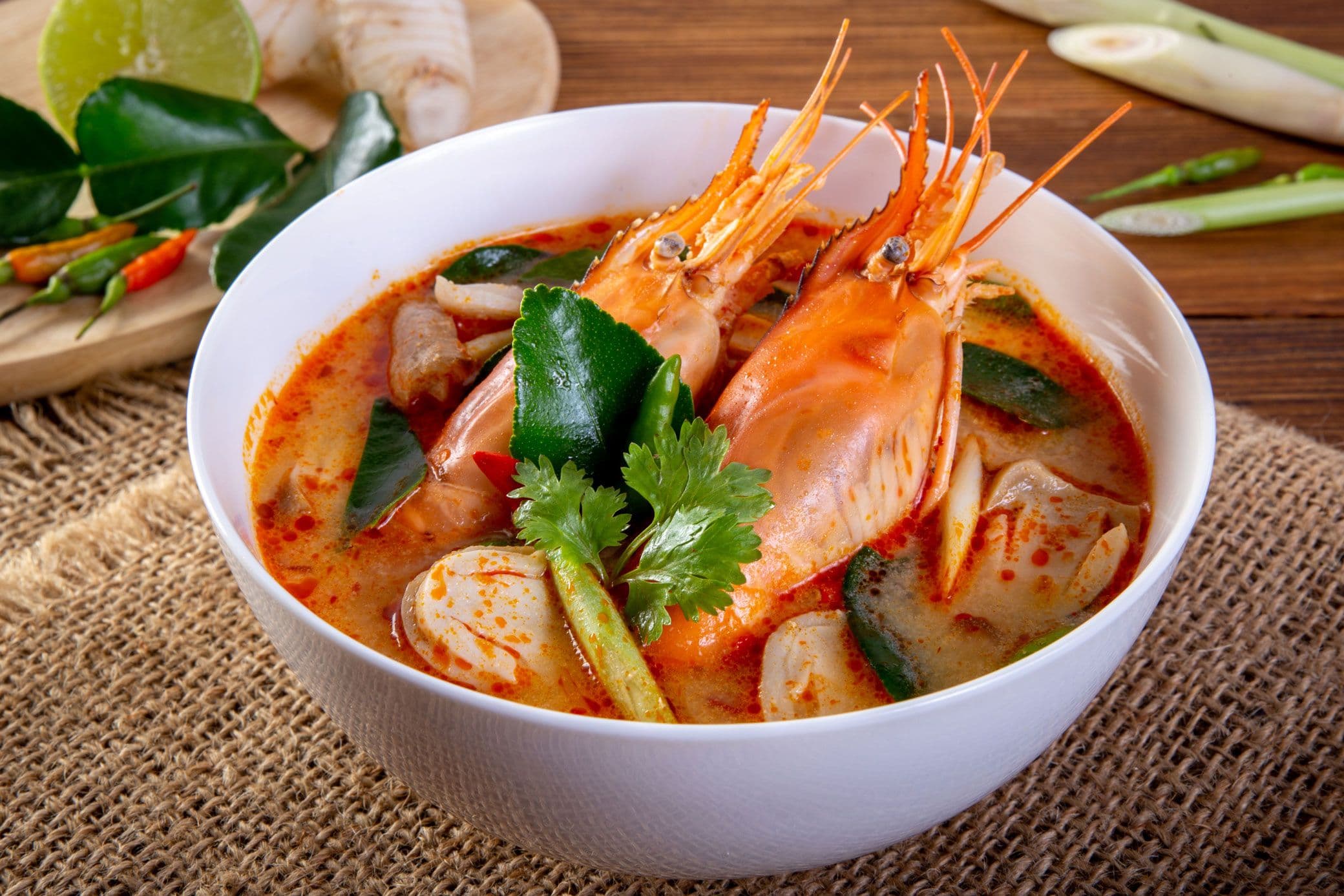

If there is one Thai dish that many people around the world immediately associate with Thailand, it is often Tom Yum Goong.
More than just a spicy soup, Tom Yum combines sourness, heat, saltiness, fresh herbs, and seafood into one bowl that strongly reflects Thai food culture.
Why Tom Yum Is Different
One thing that makes Tom Yum stand out immediately is its aroma.
Before tasting the soup, people often notice the smell of lemongrass, kaffir lime leaves, galangal, and chili rising from the bowl.
Unlike many Western soups that rely on butter or cream for richness, Tom Yum builds flavor through fresh herbs, lime juice, fish sauce, and broth.
This sharp freshness became one of the defining characteristics of Thai cuisine.
Clear Soup vs Creamy Soup
The word “Goong” means shrimp, which became the most internationally famous version of Tom Yum.
However, Thailand also has Tom Yum seafood, fish, chicken, clear soup, and creamy soup variations.
Clear Tom Yum is generally considered the older style with lighter and sharper herbal flavor.
Creamy Tom Yum became more internationally recognizable because it often includes chili paste and evaporated milk or cream, creating richer orange-colored broth.
Lemongrass, galangal, and kaffir lime leaves define the soup.
Tom Yum balances spicy, sour, salty, and aromatic flavors.
Tom Yum flavor appears in instant noodles, snacks, and soup bases worldwide.
The Role of Thai Herbs
Tom Yum reflects the food culture of Thailand’s central river plains where herbs, fresh seafood, and market cooking developed together.
River prawns became especially associated with premium Tom Yum in areas like Ayutthaya and seafood restaurants.
Many visitors are surprised that some herbs inside the soup are not meant to be eaten directly.
Ingredients like galangal, lemongrass, and kaffir lime leaves are mainly used to infuse aroma into the broth.
For many travelers, Tom Yum becomes the first taste of Thailand they never forget.
Things to Know Before Ordering
Local Tom Yum restaurants in Thailand can be significantly spicier and more sour than versions served overseas.
Travelers who prefer mild flavor may want to request “mai phet” before ordering.
Tom Yum is usually best eaten together with steamed rice, especially when the soup is intensely spicy.
Although Tom Yum became internationally famous, it still remains everyday food for many Thai families and seafood restaurants.